Webhook vs Polling for Async Web Data API Delivery
Webhooks cut request waste by 98% compared to polling for async scraping jobs.
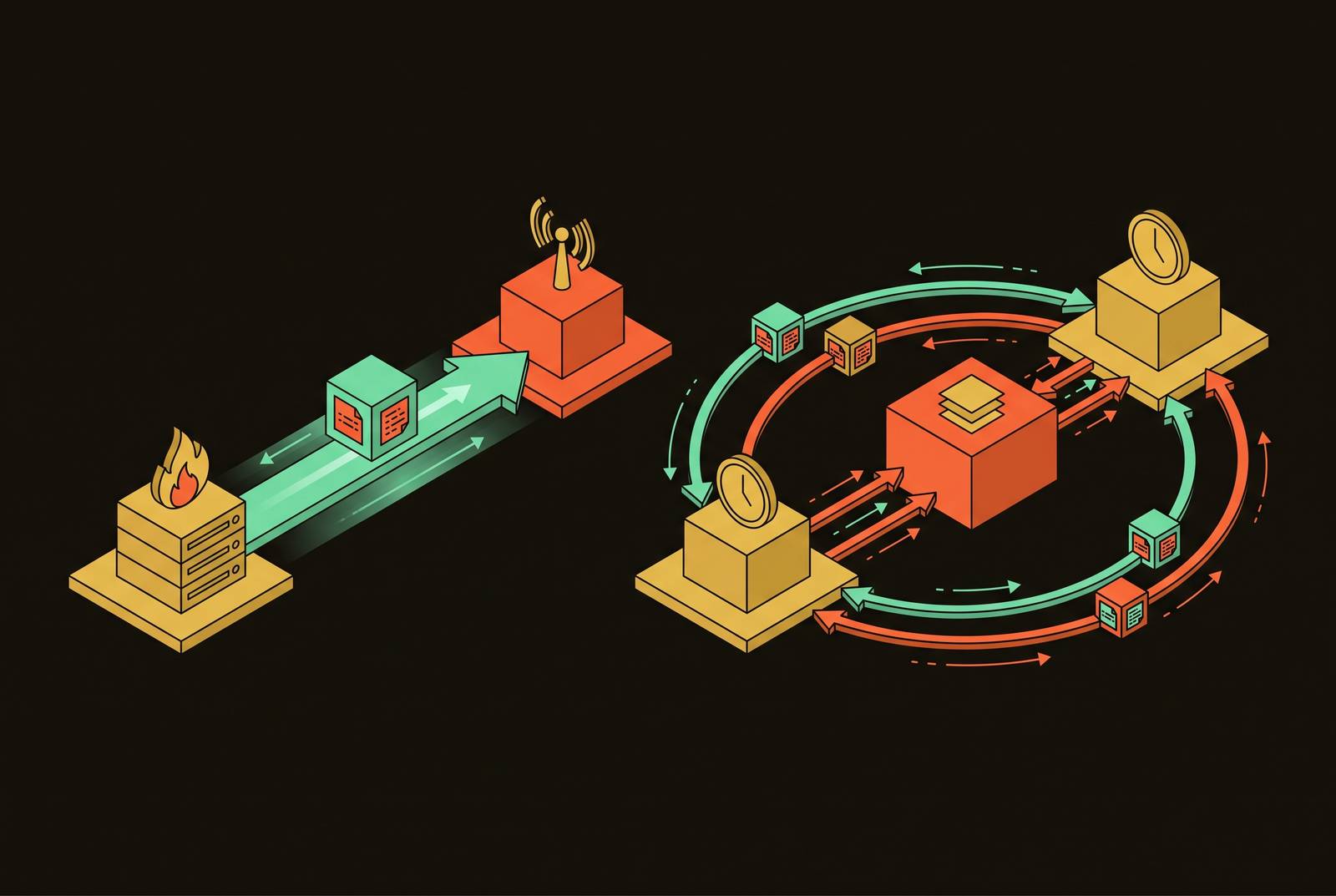
Async scraping jobs don't work that way. You submit the job, and the result shows up later, on its own schedule. That gap between "submitted" and "done" sounds small until you're the one building around it.
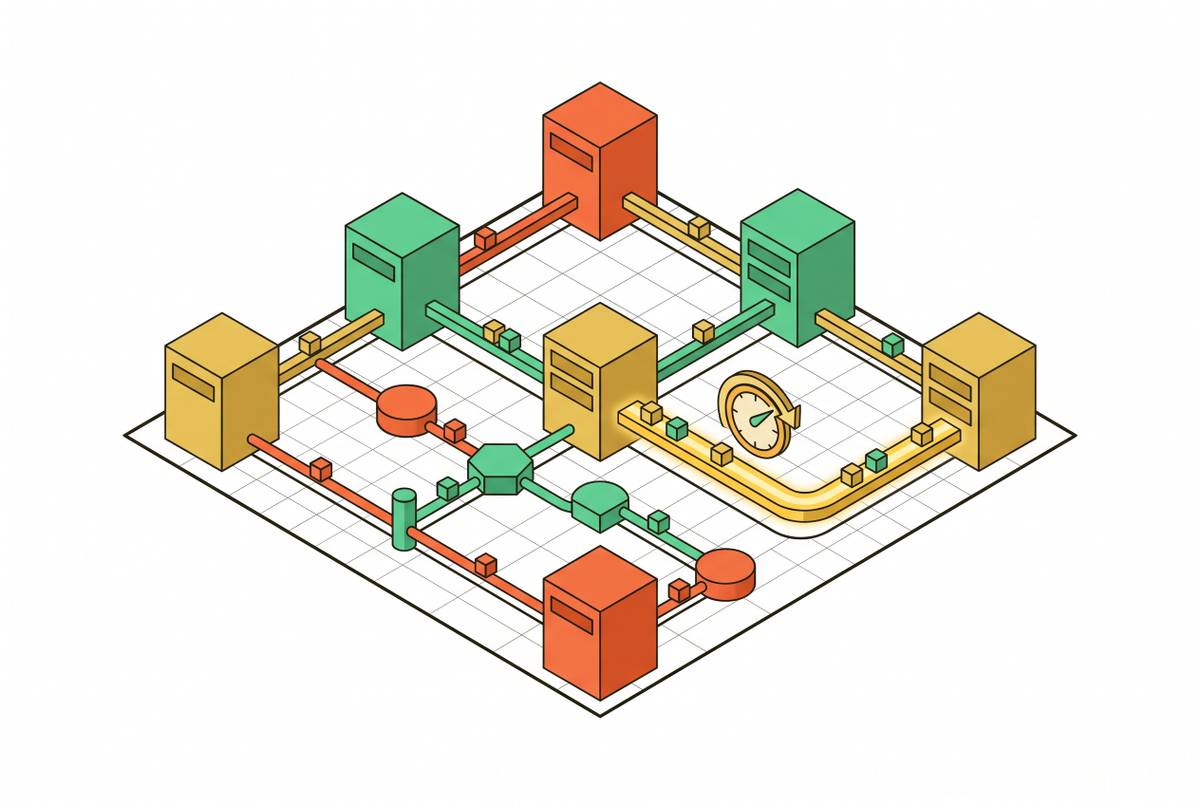
Crawl duration is the wildcard. A single-page fetch might finish in a couple seconds. Meanwhile, whatever's waiting on that result, an LLM pipeline, a RAG indexer, an autonomous agent mid-task, is stuck. That's a delay with real downstream cost. It's a blocked pipeline, a stalled agent, a user staring at a loading spinner that has no defined end.
All four major cloud extraction providers handle large jobs this way: asynchronously, by design. Submit, then retrieve. That means the architecture around an agent calling a scraping API looks nothing like the architecture around a tool call that returns inline. You need a plan for bridging the wait: your app can go check on the job, or the job can come tell your app when it's done. Polling and webhooks. Both solve the same underlying problem, keeping two systems in sync, but they solve it from opposite directions, and neither one wins in every situation.
Polling and its place in a scraping pipeline
Polling is the pull model. Your application fires repeated HTTP GET requests at the same job-status endpoint, on a timer, until the job reports back as finished. No fanfare, no inbound infrastructure. You just keep asking.
That simplicity is the whole appeal. Polling needs no inbound endpoint, no networking configuration on your end, and no server-side callback support from the scraping API itself. Polling works even if the provider never built webhook support, asking nothing of the other side. It's the fallback that asks nothing of the other side.
It also fits certain jobs naturally. Short, predictable crawls, the kind where the wait is measured in seconds or a couple minutes, are a good match, since nearly every check has a real shot at returning something useful. Checking whether an export or report has finished generating, when there's no completion event to hook into anyway, is the same story.
There's a quieter benefit too: polling gives you a fresh snapshot of state every time you ask. That makes reconciliation easier down the line, since you can compare one snapshot to the next and catch drift.
Robust polling uses overlap windows and deduplicates by job ID to avoid missed or duplicate results from clock skew or equal timestamps. Second, back off. Exponential backoff with jitter, the pattern AWS's Well-Architected guidance recommends, is the right retry approach. A tight loop with no backoff just multiplies requests and burns through rate-limit quota for nothing.
Zapier's industry estimate, cited by Svix, puts the useful-hit rate of a typical polling loop at around 1.5%. Roughly 98.5% of requests come back empty Svix. You're asking, and asking, and asking, and getting nothing back almost every single time.
Where polling breaks down as crawl scale and agent architecture grow
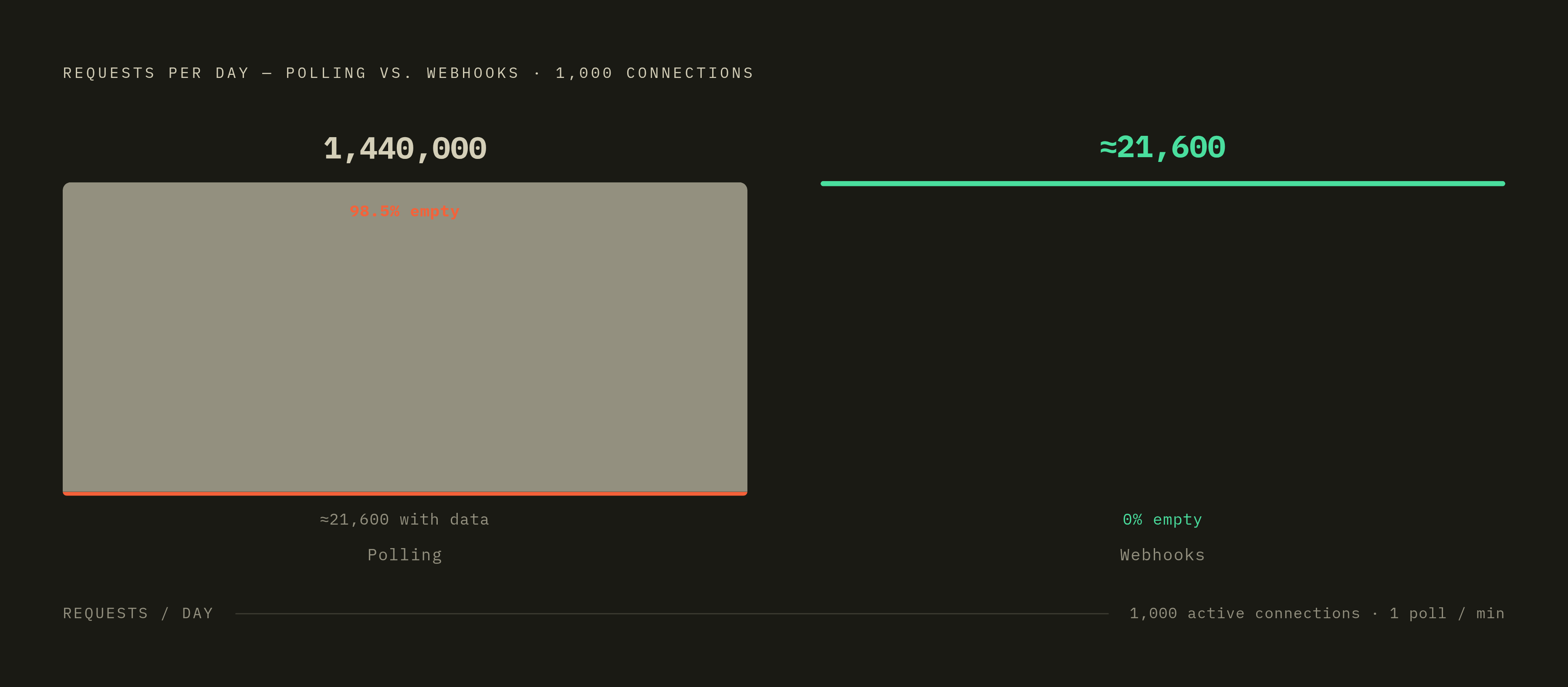
That 1.5% figure isn't just a curiosity, it's a cost model Svix. Nearly every request you send consumes rate-limit quota and server capacity, and delivers nothing in return Svix. At small scale, that waste is annoying. At real scale, it's the whole budget.
Run the math. A system with 1,000 active connections, each polling once a minute, generates something like 1.44 million requests a day, before you've even accounted for pagination Medium. Most of those 1.44 million requests return nothing new Medium. Many scraping APIs charge per request or cap you with rate limits, so you're paying, or throttling yourself, for the privilege of asking questions with no answer.
There's a latency cost baked in too. Data is only as fresh as your last poll. Shrinking the interval to reduce staleness multiplies the empty requests linearly. There's no way to buy freshness without buying waste alongside it, not with pure polling.
Long polling, where the connection stays open until data shows up or a timeout hits, softens this a little. But it still ties up server connections on your end, and it doesn't scale cleanly across hundreds or thousands of concurrent jobs running at once.
Polling does have one advantage that's easy to overlook: it catches silent failure. A job that dies quietly just stops updating, and a poll will notice that nothing's changing. Event-driven systems need an explicit failure event to catch the same problem, and not every scraping API bothers to emit one. Keep that in your back pocket. It matters later, when the hybrid pattern comes up.
Webhooks and their advantage for longer crawl jobs
Webhooks reverse the direction of communication. Instead of your app asking the provider, the provider tells you. The scraping API sends an HTTP POST to a URL you registered, the instant a job finishes or an event fires.
Your server sits idle until there's something real to process. No wasted cycles between the moment a job completes and the moment you find out about it. Compare the latency directly: AWS SNS delivers push notifications in under 30 milliseconds under typical conditions, against a polling loop where the worst-case wait is the full length of your polling interval, whatever that happens to be.
The request-volume math flips too. If a job or user triggers 100 events in a month, a webhook setup produces exactly 100 calls Medium. A polling setup produces continuous calls on a fixed schedule, whether or not anything happened in that window Medium. One tracks activity. The other tracks time.
So where's the actual threshold? Sources point to batch jobs of 1,000 or more items per job as the point where webhook delivery clearly wins, because polling starts adding real latency and real load once jobs get that big. Below that, for smaller, predictable workloads, say around 200 items per call with a 3 to 5 minute completion time, synchronous or short-poll patterns are still perfectly reasonable. Nobody needs webhook infrastructure for a job that finishes before a human could finish reading about it.
What a production webhook handler for a scraping pipeline needs
Receiving the payload is the trivial part. Making that reception reliable in production is where the real engineering lives, and the sources break it down into five specific requirements.
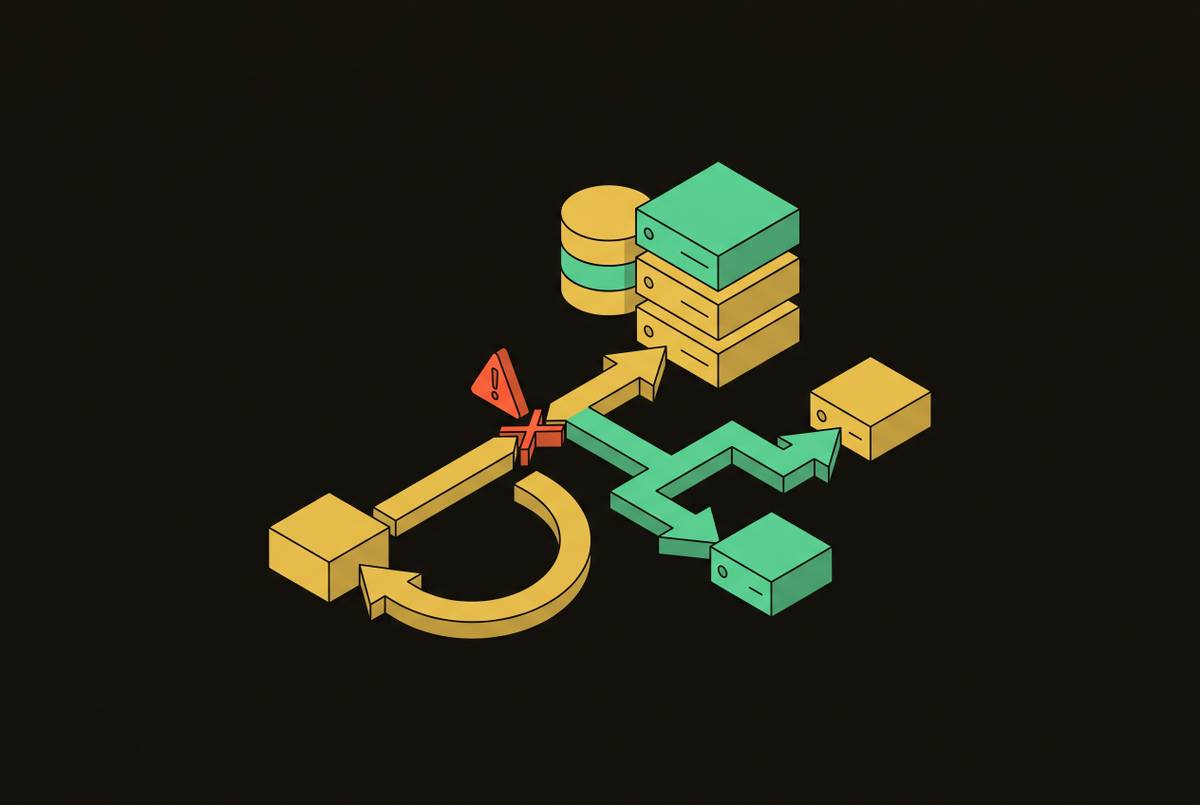
Signature verification comes first: confirm the payload actually came from the scraping API and not from someone spoofing your endpoint. Idempotency keys come next, because retries and duplicate deliveries are a certainty, not an edge case, and your downstream pipeline can't afford to process the same crawl result twice. Retry handling matters just as much on your side: if your LLM indexer or database write fails transiently, that crawl result cannot just vanish. Ordering tolerance is the fourth piece, since webhook deliveries can arrive out of sequence and your handler needs to either tolerate that or explicitly re-sequence events. And fifth, dead-letter queueing: webhooks that keep failing need somewhere to land for manual review.
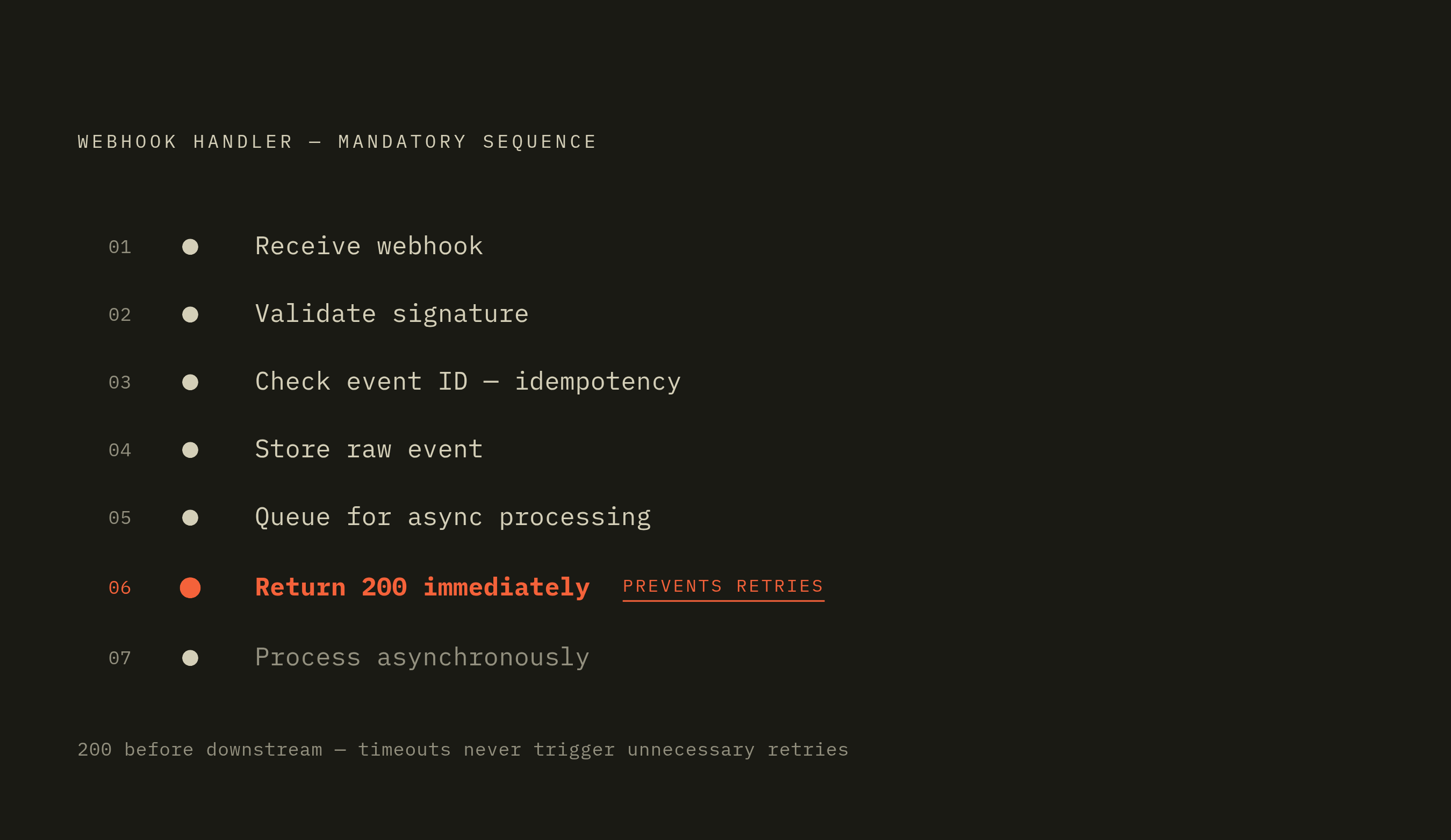
The recommended flow ties all steps together in sequence, an order that is not arbitrary: receive the webhook, validate the signature, check the event ID for idempotency, store the raw event, queue it for async processing, return a 200 immediately, and then process asynchronously. That ordering is not arbitrary. Returning 200 immediately matters because if your handler makes the sender wait on your downstream logic before responding, you'll trigger timeouts, and timeouts trigger unnecessary retries.
None of this is paranoid over-engineering. Stripe and Microsoft both document, as a baseline fact about how webhooks behave in the real world, that deliveries can be delayed, duplicated, arrive out of order, or get dropped entirely. That's a failure mode common enough to plan for from day one. It's the standard you should build against from day one. Practically, that means logging enough metadata, job ID, event timestamp, delivery timestamp, to actually investigate a failure when a delay or drop happens. And on the security side, there's no gray area: HTTPS is required, and signature verification isn't an optional hardening step you get to later, it's table stakes.
Why webhooks alone are not sufficient and the hybrid pattern that production pipelines use
Webhooks solve latency, but they introduce a dependency problem. Native webhook support lives entirely inside the source integration, so its reliability, its retry behavior, whether it preserves order, how long a subscription stays alive, and what shape the payload takes all vary by provider. Plenty of APIs offer no webhooks at all, or only cover some of their events. You're at the mercy of someone else's implementation choices.
Even the providers with mature, well-documented webhook systems don't promise strong delivery guarantees. Stripe and Microsoft say so directly. That's not a theoretical gap somebody might hit someday.
So the production-grade answer isn't webhooks alone, it's a hybrid. Sync initial state through the API to know where things stand, use webhooks as the low-latency signal for what's changed, and run periodic reconciliation against the API to catch anything the webhooks missed. A reconciliation pass can catch a job that completed but whose webhook silently failed to arrive, something a pure webhook setup has no way to recover from on its own. The real production stack is webhooks plus APIs plus queues plus scheduled reconciliation. It never was.
Webhook infrastructure tooling available in 2026
Building signature verification, retry queues, and a delivery dashboard from scratch is a multi-week project most teams shouldn't take on themselves.
Svix handles the outbound side, sending webhooks to your own customers. It's running in production at companies like Clerk, Brex, PagerDuty, and Twilio, along with Lob, Resend, Replicate, Lithic, Benchling, Drata, and incident.io, covering delivery, retries, and an embeddable portal customers can use to manage their own webhook settings. The free tier covers 50,000 messages a month, and paid plans start around $490 a month. If you're a scraping API provider building webhook delivery into your own product, or relaying crawl results out to your own customers, this is the category built for you.
Hookdeck sits on the other side, the receiving end, though it also offers outbound delivery through Hookdeck Outpost. It ingests webhooks from providers like Stripe or GitHub, buffers events during downstream outages so nothing gets lost while your system is down, applies transformations on the way in, and gives you full-text search plus replay for debugging. For a team receiving crawl-complete events from a scraping API and needing that ingestion to hold up under downstream failure, this is the relevant tool.
Svix serves teams that send webhooks, Hookdeck serves teams that receive them. Most teams building a scraping pipeline are on the receiving end, catching crawl-complete events rather than sending them out. Neither tool replaces the reconciliation layer described above. Both just take a large chunk of the infrastructure burden off your plate so you're not maintaining it yourself.
How streaming patterns (SSE, Kafka) relate to webhook and polling choices for high-volume pipelines
Webhooks are built for one thing: system-to-system HTTP POST callbacks. Server-Sent Events, SSE, solve a different problem, one-way streaming from a server straight to a client, with support for message and event publications layered on top of ordinary REST behavior. Under HTTP/2, a lot of SSE connections multiplex over a single TCP connection. OpenAI, Anthropic, and Google all stream their chat responses over SSE because of this.
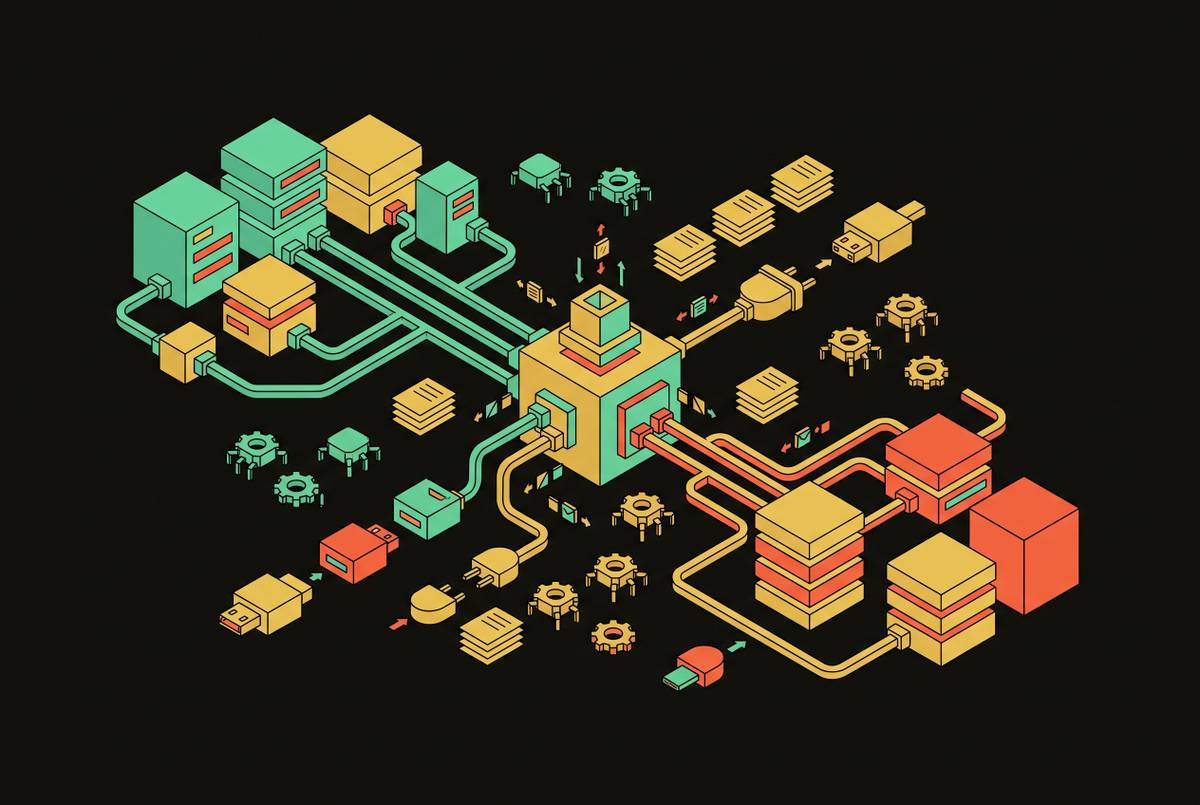
In practice, these patterns stack rather than compete. A common setup: a webhook arrives from a scraping API into your backend, and your backend relays that update onward to a browser or downstream service over WebSocket or SSE. The webhook handles the server-to-server leg. SSE or WebSocket handles the last mile to whoever's actually watching.
At real volume, particularly for RAG pipelines that need to stay current, streaming databases with native CDC connectors and built-in embedding functions turn re-indexing into a continuous, event-driven process rather than a scheduled batch job, keeping embeddings fresh within seconds of a document changing, at a cost that scales with how much actually changed rather than with the size of the whole corpus. Apache Kafka and Apache Pulsar cover a related but distinct need: continuous, ordered delivery of atomic messages representing state changes, which matters once a crawl result needs to fan out reliably to more than one consumer.
None of this replaces the webhook-versus-polling decision. Teams reach for this layer once webhook volume or ordering requirements outgrow what a plain HTTP POST callback can carry.
Matching the delivery pattern to the specific job characteristics of an async scraping API
This was never a matter of taste. The right pattern falls out of the specific characteristics of the job in front of you, and there are a handful of axes that actually decide it.
Crawl duration is the first axis. Short, predictable jobs, seconds to a few minutes, small batch, tolerate polling or even a synchronous call just fine. Long, unpredictable crawls call for webhooks. Data volume is the second: below roughly 1,000 items per job, synchronous or short-poll stays manageable, and above that threshold, webhook delivery is the pattern that actually holds up. Third is the shape of the downstream consumer. A blocking agent tool call that's waiting on a result wants small jobs it can return synchronously, or an agent architected to re-enter on a callback. An event-driven pipeline sitting behind a queue is a natural home for webhooks. Fourth: does the provider even support webhooks. If not, polling is the fallback, with reconciliation picking up the slack. And fifth, acceptable staleness. Minutes to hours of lag, fine, poll. Near-instant reaction required, webhooks.
RAG pipelines deserve a specific note here. Staleness in a RAG system breaks down into two separate problems, coverage and drift, and webhook-triggered re-indexing right when a job completes narrows both of those more effectively than scheduled polling does. Periodic reconciliation still has to run underneath it, to catch whatever the webhooks missed.
The stakes of getting this right keep climbing as this scales up. Gartner's 2025 projection put task-specific AI agents in 40% of enterprise applications by the end of 2026, up from under 5% before. That's a lot of agents, and every one of them depends on some async job finishing somewhere and a result making its way back reliably. Delivery pattern becomes a first-class piece of the architecture at that scale, because at that volume it shapes how the whole system behaves.
As a working rule: polling wins when the job is short and predictable, there's no inbound endpoint available, the provider has no webhook support, or reconciliation is the actual goal rather than speed. Webhooks win when the job runs long and unpredictably, the downstream system needs to react close to instantly, volume is high, and cost efficiency at scale actually matters. Hybrid is the answer nearly every production system lands on eventually, combining an initial sync, webhook-driven updates, and scheduled reconciliation into one system that doesn't rely on any single piece working perfectly every time.
All of this assumes a developer is stitching together a scraping API, a delivery mechanism, retry infrastructure, and a downstream pipeline, piece by piece, which is exactly the fragmented stack this piece has been walking through. That fragmentation is real work, and it occurs before a single feature ships. Data infrastructure serving as the layer behind products and agents at companies like Mintlify, SiteGPT, and Sourcely exists precisely because that stitching shouldn't have to happen from scratch every time, and that kind of infrastructure has drawn backing from Y Combinator.
The throughline across all of it: AI agents are only as good as the freshness of what they're reasoning over. An agent working off a frozen snapshot of the web is already behind, no matter how well-tuned its reasoning is. Webhook, polling, or hybrid, whichever pattern a job calls for, the delivery mechanism only earns its keep if what it's delivering is current, structured, and actually ready for the pipeline waiting on the other end.