Total Cost of Ownership for Self-Hosted Web Scraping Infrastructure
Maintenance and proxies dwarf initial build costs in self-hosted scraping over time.
Self-hosted web scraping infrastructure costs more than the build estimate suggests because the build is only the beginning. Total cost of ownership covers the browsers, proxies, refresh cycles, and engineering work it takes to keep data flowing. The central budgeting mistake is treating that recurring work as incidental overhead when, over time, it becomes the larger bill.
Why self-hosted scraping budgets break down before the first production run
Your engineer quotes the work needed to launch a scraper, but the team ends up paying to operate a changing system. The quote covers HTTP client configuration, proxy rotation pools, DOM parsing schemas, and system hardening. Those tasks have a visible finish line, so they fit neatly into a sprint and an approval process. Everything after deployment gets called maintenance, obscuring its structural cost. The estimate can therefore be accurate about the sprint and still wrong about the commitment.
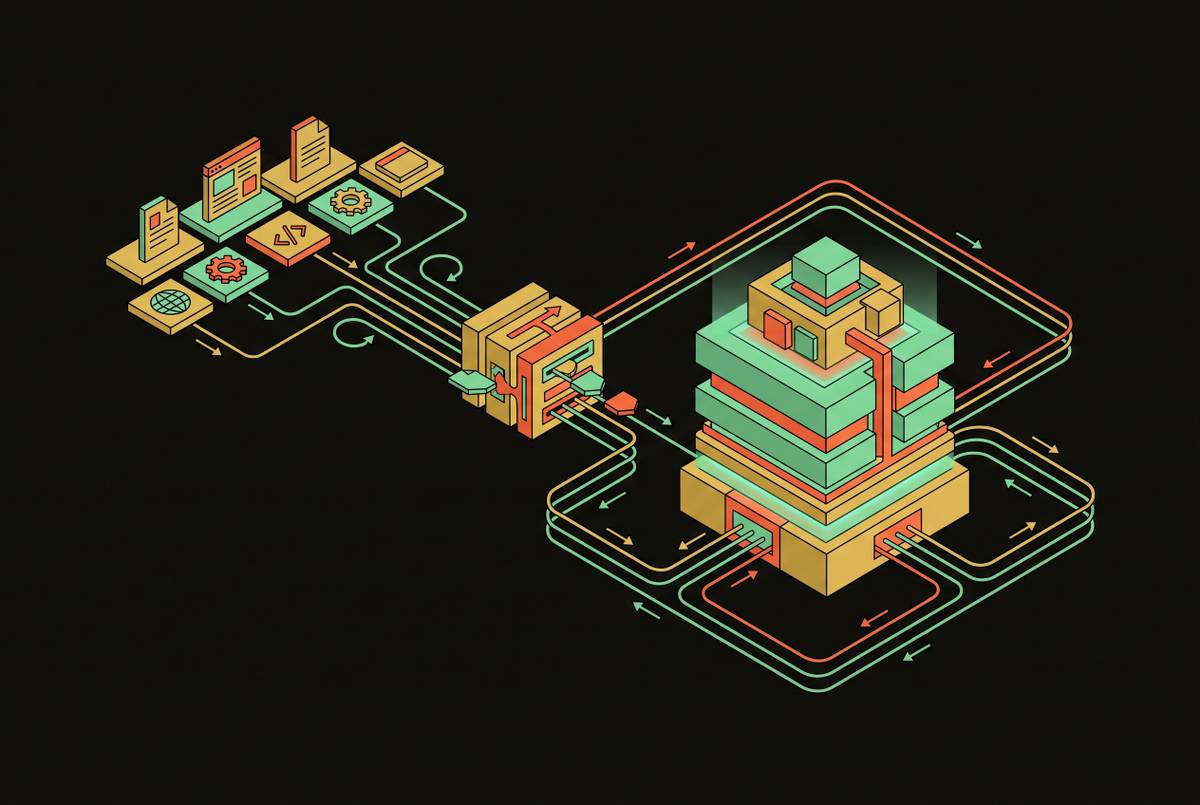
That gap starts with three technical layers that generate costs independently. The execution environment runs headless browsers and HTTP clients, while the networking layer supplies proxy IPs, rotation logic, and bandwidth. The maintenance engine keeps parsing, CAPTCHA solving, anti-bot bypass, and monitoring working as targets change. Collapsing these layers into a single project estimate hides their separate demands. Over a multi-year horizon, the initial build is the smaller expense.
The five cost buckets every self-hosted scraping project carries
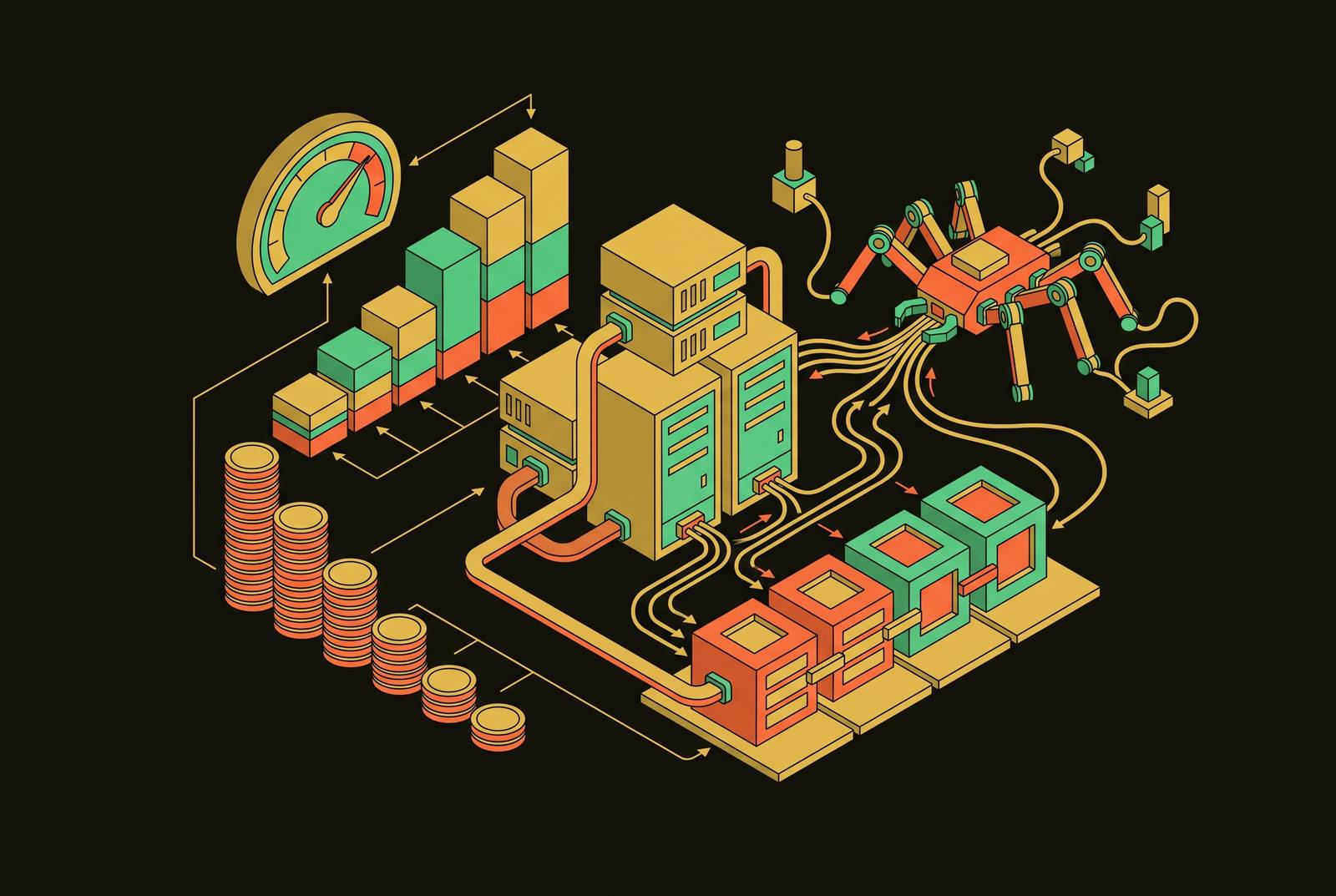
Those technical layers translate into five accounting buckets, namely development, infrastructure, proxies, data refresh, and maintenance. Development covers the engineering hours needed to design, build, test, and deploy the pipeline. For stable targets, much of that work happens once, but substantial site changes can trigger another build. Infrastructure covers recurring compute, storage, and orchestration, including virtual machines or containers, message queues, databases, and scheduled jobs. Its cost follows crawl volume and complexity.
Proxy cost depends on traffic volume and the proxy tier needed to reach the target. Data refresh is how often that traffic must run again, which multiplies what the team spends on compute and proxies for the same sources. It is a frequency-dependent driver of those bills, rather than a separate service that necessarily produces its own invoice. Maintenance covers the engineering work needed to repair selectors, handle redesigns, update bypass logic, monitor failures, and resolve data quality problems. Naming all five makes the estimate auditable without confusing a technical component with the full cost of owning it.
The cost multipliers that break any budget built on the simple case
JavaScript rendering is a common multiplier because headless Chrome uses far more CPU and RAM per request than a plain HTTP client. Single-Page Applications need to run in a browser, which takes more than a simple fetch. At enterprise scale, those browsers also need orchestration, including Kubernetes auto-scaling groups and custom process recyclers.
Aggressive bot detection changes the networking requirement just as sharply. Protected targets can require residential or ISP proxies instead of datacenter IPs, shifting the cost structure before production starts. Refresh frequency then multiplies the workload, so an hourly crawl costs many times more than a weekly crawl of the same targets. Login requirements add session management, cookie persistence, and authentication flows. Geographic targeting needs premium proxies, while CAPTCHA bypass needs more work to keep up with changes.
Target count and compliance create further multipliers. Each domain has its own parser logic and failure modes, so two pipelines with the same page count can require very different engineering effort. PII requirements can add anonymization pipelines, audit logging, and GDPR/CCPA tooling. These characteristics are knowable during scoping. When several apply together, a budget based on simple static pages can be wrong by a factor.
What the initial build actually costs at each scale
At startup or MVP scale, serving thousands of pages per month, a basic production pipeline for a small number of sources takes several weeks of engineering time. A small VPS may handle hobby-scale traffic, but the team still has to do the build work even when the server costs little. Production reliability requires more than a parser that returns the right result once. Proxy health checks, rotation, and failover belong to that foundation, as do browser memory management, crash recovery, and session isolation where browsers are needed.
At growth scale, with tens of thousands to hundreds of thousands of pages per month, much depends on the infrastructure skills the team already has. A team that knows the stack may have little extra work to keep it running, while a team that is new to it must spend time learning before it can run the stack reliably. Learning proxy management and anti-bot bypass from scratch can add weeks to an estimate. At enterprise scale, with millions of pages per month, the build needs people with senior web and anti-bot expertise as well as DevOps skills for distributed systems and load balancing. The visible build cost rises with scale, but team readiness determines how much of it the original quote misses.
The maintenance tax: why the recurring cost dwarfs the build
Once the pipeline is live, the targets keep changing even though the budget for the build has run out. CSS class renames and DOM restructuring break selectors, while lazy-loading changes affect how content appears. A site redesign can invalidate an extraction schema. IP bans and rotation failures demand new proxy sourcing or changes to routing logic. These are not extensions to the original feature set, but work needed to preserve the result the team already paid to obtain.
Anti-bot protection makes that work an escalation problem. Detection uses protocol fingerprinting and behavioral analysis as well as IP blocking. When a target upgrades its defenses, success rates can fall until the scraper is hardened again. CAPTCHA changes can also force updates to solving integrations.
Failed attempts use resources but yield no usable data, so the pipeline pays more to get the same output. Repairs take engineering time while retries cost money to run, bringing together two costs that budgets often keep apart. At scale, keeping the system running can consume a large share of a dedicated engineer’s capacity. That work also displaces product development, although its immediate purpose is simply to restore collection.
Some failures stop collection entirely. A broken custom proxy rotation system, a key engineer’s departure, or a fundamental anti-bot update can halt a pipeline until it is rebuilt. The resulting gaps in historical data may be unrecoverable. Across a multi-year horizon, maintenance can therefore outweigh the build through both routine repairs and major interruptions.
Proxy economics and bandwidth bloat as the largest recurring hard cost
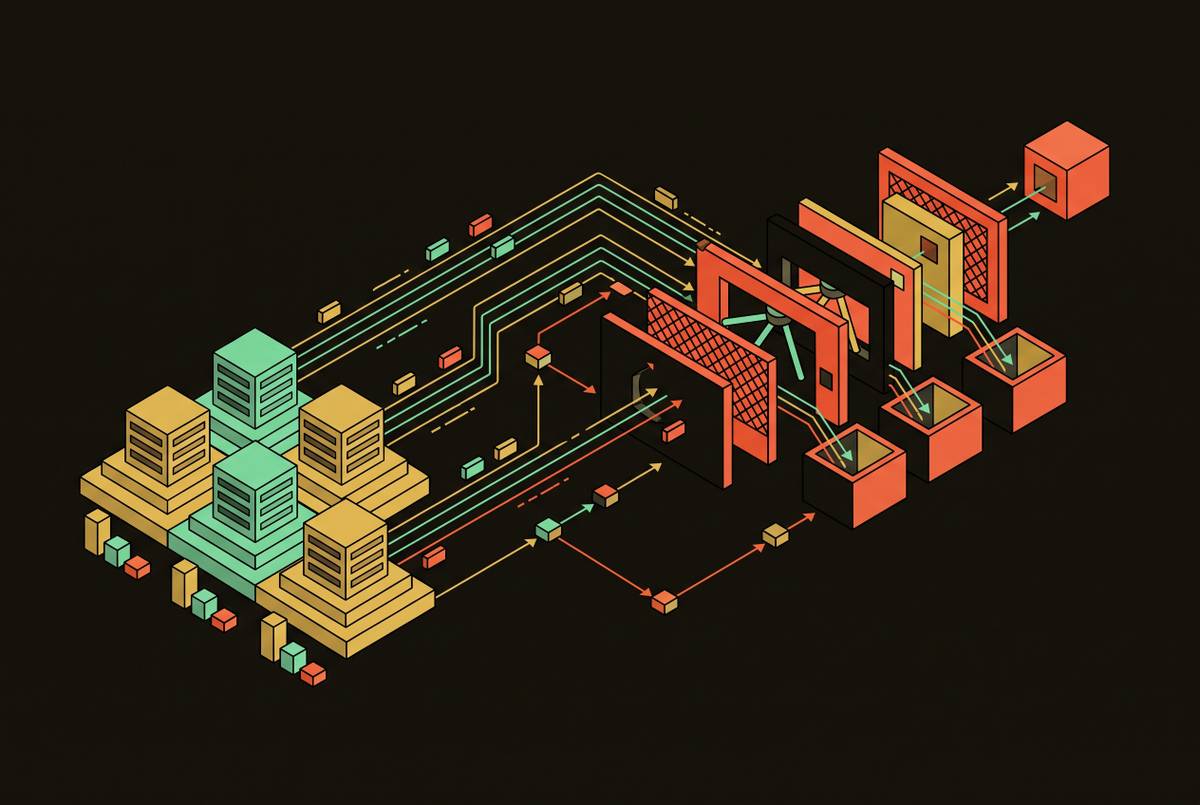
Even with engineering time set aside, protected targets can make proxies the largest recurring invoice. Datacenter proxies sit at the low end of the pricing structure, but modern edge firewalls can identify and block their IPs. ISP proxies occupy an intermediate tier, while residential proxies carry the highest per-GB rates in this framework. Residential traffic uses consumer ISP IPs and is billed by data transfer volume. The number of pages alone tells too little to explain the bill.
Browser traffic widens that gap because a rendered page includes more than its HTML. Headless browsers also fetch JavaScript bundles, images, and telemetry payloads, making transfers many times larger than a plain HTTP fetch. At high volume, that bandwidth bloat can lead to a large proxy bill even when the page target seems modest. The bill follows transferred data multiplied by the residential proxy rate.
The proxy portion of the retry tax applies to every attempt, successful or not. A blocked response can still use bandwidth the team pays for before another attempt yields useful data. That charge is separate from the compute spent running the retry. At serious production volume, proxy spending alone can exceed the cost of the engineers operating the pipeline. Proxy architecture is therefore a financial decision as well as a technical one.
How engineer opportunity cost makes the true TCO larger than any invoice shows
The invoice still leaves out what engineers could have built instead. Maintenance usually redirects existing staff. Payroll may stay the same while engineers spend less time on product development and more on selector repair, IP bans, and pipeline recovery. That displacement makes opportunity cost easy to miss in a budget review. It can also make it the largest hidden cost of ownership.
An in-house project can take months from planning to production, delaying the feature that needs its data. For an AI pipeline, a delay in extraction holds back the downstream reasoning product as well. The cost is not only the salary paid during that period, but the alternative work left undone.
After launch, calling repairs “normal engineering work” does not make their alternative use disappear. Time spent maintaining extraction is time unavailable for model integration, the UI, or the next feature. An honest comparison therefore distinguishes the labor needed to operate the scraper from the product work that labor displaces. Otherwise, a stable payroll can conceal a shrinking product roadmap.
Full TCO benchmarks at three production scales
At startup or growth scale, with thousands to low hundreds of thousands of pages per month, developer time generally dominates. A VPS, residential proxy allowance, and storage still create a meaningful infrastructure floor. But engineering hours cost a lot compared with those bills, especially when the team has to learn the stack. The annual comparison needs the initial build plus recurring infrastructure, proxy traffic, refresh demand, and maintenance. At this scale, existing expertise is often the decisive input in a comparison with a managed platform.
At mid-scale, covering hundreds of thousands to low millions of pages per month, the balance shifts toward proxies. The same maintenance work now supports a larger traffic bill, and rendering requirements or low success rates amplify that bill. Refresh frequency matters because it repeatedly applies those costs to the same target set. A managed-platform benchmark is useful here only against the full self-hosted workload.
At enterprise scale, with millions of pages per month and protected targets, clusters, residential proxies, and DevOps each become large independent cost centers. Very high volume and a dedicated engineering team can make self-hosting cost-competitive. Static, unprotected HTML and JavaScript-rendered, bot-protected targets can differ by an order of magnitude in total cost at the same page volume. Two or more active multipliers can move an annual budget into six figures, so these benchmarks describe cost patterns.
When self-hosted is the right call and when the TCO argues against it
Self-hosting makes the strongest economic case when extraction is genuinely core to the product. Dedicated infrastructure engineers can own the stack without taking people away from product work. Strict data residency or compliance requirements may also prevent the use of third-party infrastructure. Very high volume strengthens the case when targets are stable and well-defined. Under those conditions, the team has both a reason to own the system and the capacity to absorb its recurring demands.
A managed API layer makes the stronger case when scraping is only the input to an AI pipeline, a RAG system, or a product feature. Teams that lack browser automation and anti-bot skills need time to learn them, even though scraping still only feeds the product. Targets that change often or have heavy protection need still more maintenance. When time-to-first-data matters, a months-long infrastructure build also delays everything that depends on it. Building cheaply now and migrating later does not avoid the choice, because late migration carries transition costs.
AI products add another requirement because raw HTML is not the final input they need. Self-hosted pipelines need DOM cleaning before data reaches the model, which adds engineering work and inference cost for each page. A well-designed extraction API can handle token-efficient output such as Markdown at the extraction layer. For most teams building AI-native products, counting all these costs makes self-hosting a poor choice within the first year, even before counting the product work put aside. The decision belongs on the cost of sustained, usable data delivery.