Rotating Proxy Architecture for High-Volume Scraping
Distributes scraping traffic across rotating IPs to avoid detection and bans.
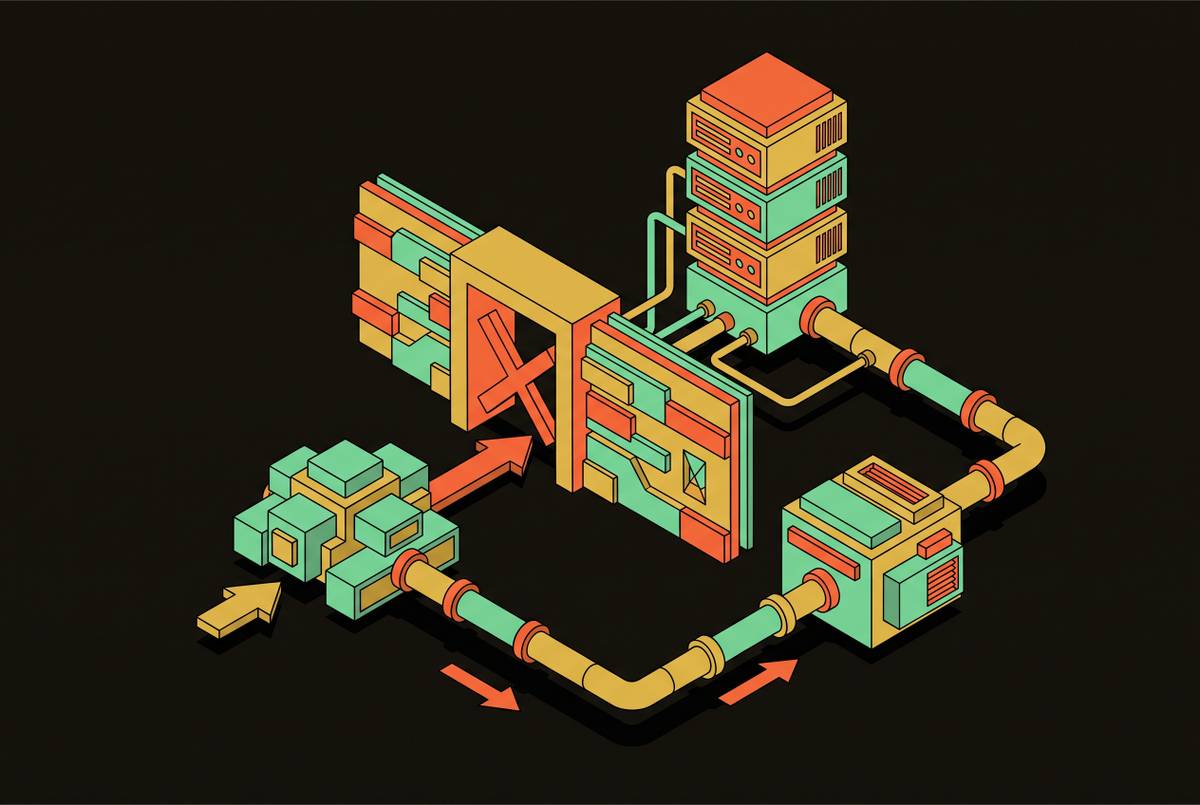
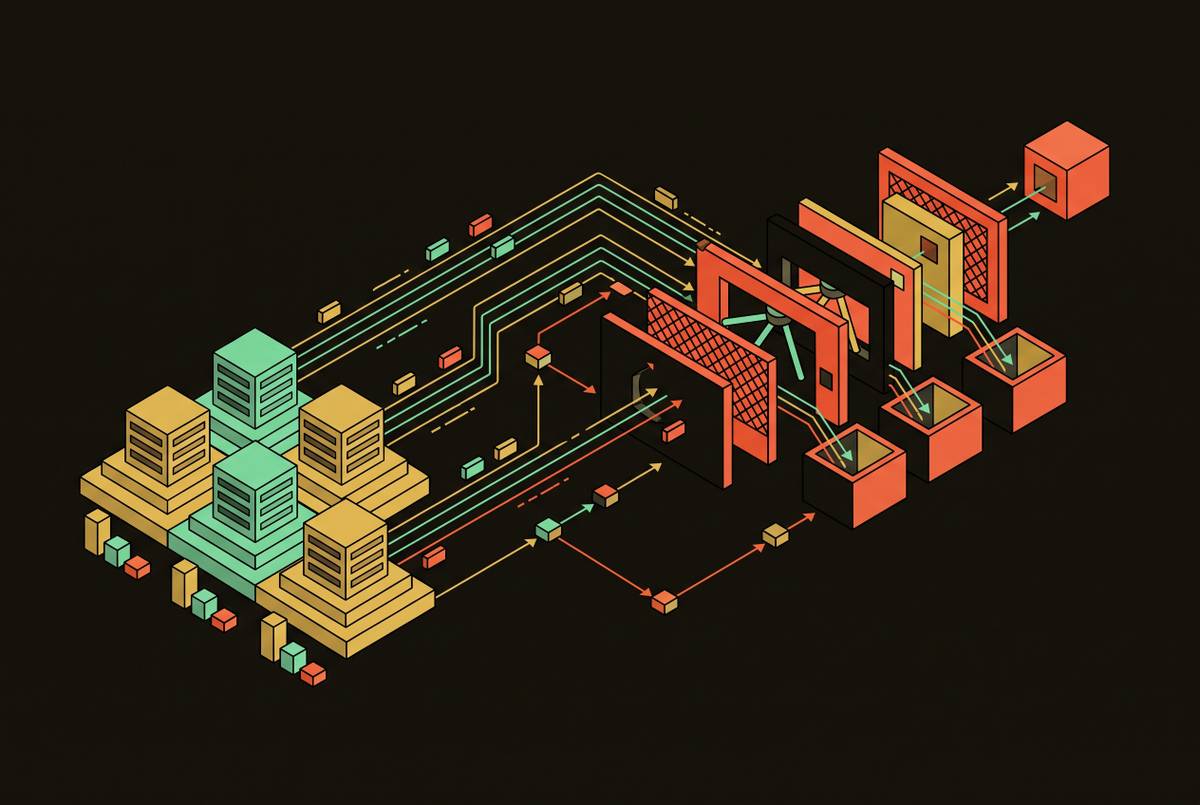
Rotating proxy architecture is the infrastructure layer that makes high-volume scraping possible at all: a backconnect gateway routes each outgoing request through a fresh IP drawn from a large pool, so a target site sees distributed traffic instead of one machine hammering its servers. Picking the correct rotation mode, IP type, and detection countermeasures for a given target is what separates a scraping pipeline that runs for months from one that breaks within days. The sections below walk through each decision point in the order a developer actually hits them, from gateway mechanics to evaluating providers against a real workload.
Why rotating proxy architecture exists
Websites watch for concentrated traffic patterns, so if a single IP sends hundreds or thousands of requests, it looks nothing like normal browsing. Running enough volume from one address causes a target site to respond with rate limits, then CAPTCHAs, then an outright ban, often within minutes rather than hours.
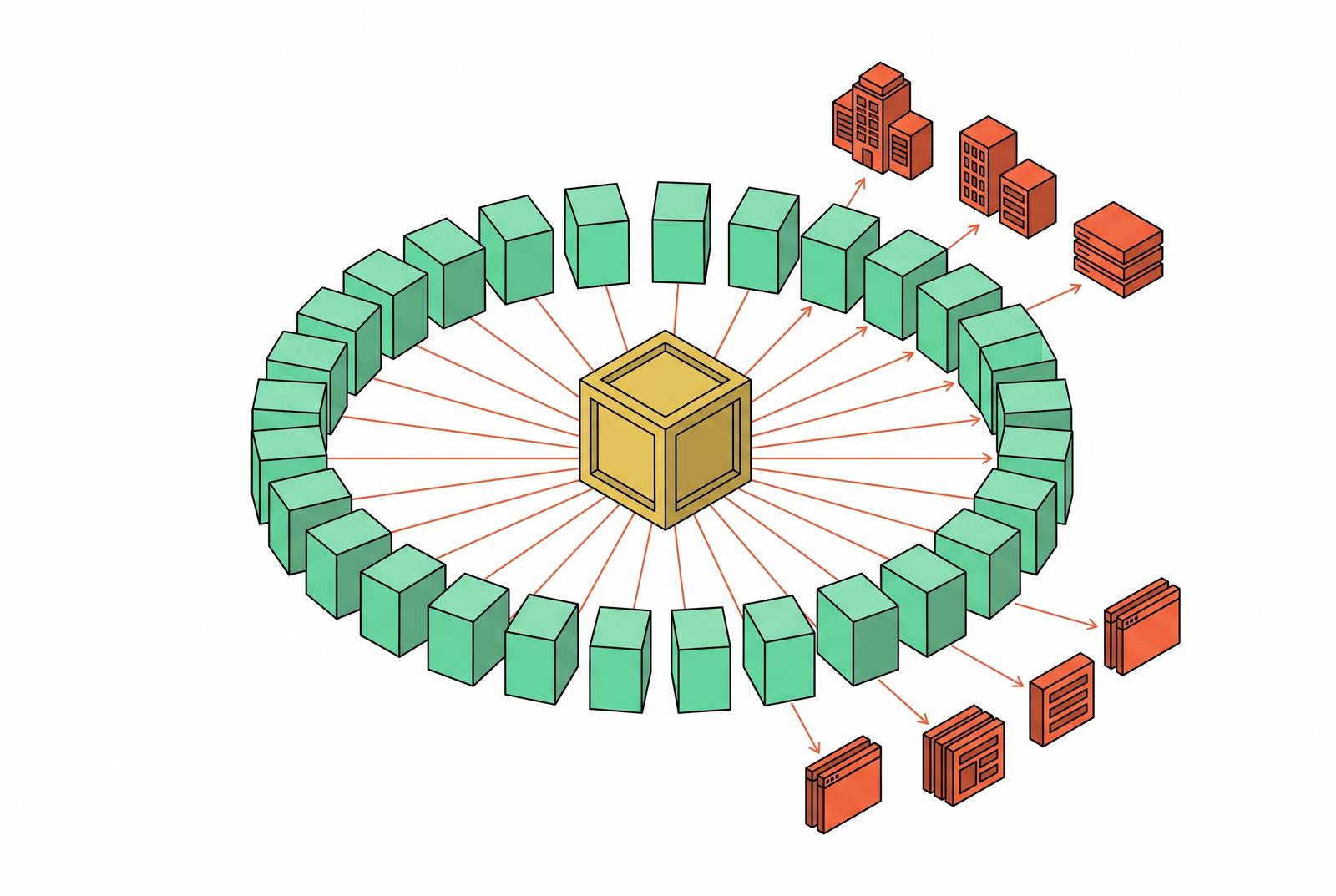
The backconnect gateway is the mechanism that gets around this. Instead of a scraper managing a list of IPs itself, it sends every request to one fixed gateway endpoint. The proxy provider handles the routing behind that endpoint, pulling a fresh IP from its pool for each outgoing call. The scraper's code never touches an individual IP address directly.
This setup splits two things that would otherwise be tangled together: the identity the scraper uses to connect (always the same gateway address, stable and simple to configure) and the identity the target server sees on the other end (changing constantly, drawn from thousands or millions of addresses). A target site watching its incoming traffic sees what looks like many different visitors, each making a handful of requests, rather than one client making all of them.
Two terms get confused here that describe entirely different things. Rotating describes how traffic is routed: the IP changes on some schedule or trigger. Residential describes where the IP comes from: it is a real address assigned to a home internet connection rather than a server. A rotating proxy service can rotate through datacenter IPs, residential IPs, ISP IPs, or mobile IPs. Rotation and origin are separate decisions, and conflating them leads to the wrong tradeoffs later.
How well rotation works in practice depends on the pool size behind the gateway. A bigger pool means any given IP gets reused less often, which lowers the odds that a target site spots a pattern and flags it. The backconnect gateway is the architectural piece everything else in this piece builds on: once traffic flows through one stable endpoint with rotation handled behind it, the next question is how often that rotation should happen.
Per-request rotation vs. sticky sessions: when each mode is the right choice
How often the IP changes isn't a style preference. It follows from whether the target workflow needs the server to remember the client across requests.
Per-request rotation assigns a new IP to every single HTTP call. This fits stateless scraping: pulling individual product pages, reading search results, grabbing public listings where each request stands on its own and the server has no reason to expect continuity between one request and the next.
Sticky sessions work the opposite way. They hold one IP in place for a connection over a set stretch of time. Workflows that depend on the server recognizing the same client across multiple steps include a logged-in session, a paginated result set, a multi-step form, and a checkout flow. Break the IP mid-sequence on any of these and the server treats the next request as coming from someone new.
Rotation frequency has to match the target's own session logic, and mismatching the two is one of the most common ways a scraper fails quietly. The code keeps running and requests keep returning successful responses, but sessions break apart mid-workflow because the server stopped recognizing the client halfway through. If you run per-request rotation against a login-gated page, the server sees a different visitor on every call, so it triggers re-authentication prompts or drops the session.
Rayobyte's rotating datacenter product illustrates the sticky-session end of this well: it supports sessions lasting up to two hours, long enough to hold one IP through an entire paginated result set or a multi-step form before releasing that address back into rotation for the next job. The choice between these two modes is the first real configuration decision in any rotating proxy setup, and it only works once it's paired with the right type of IP underneath it.
Residential IPs as the baseline for production scraping, and other IP types
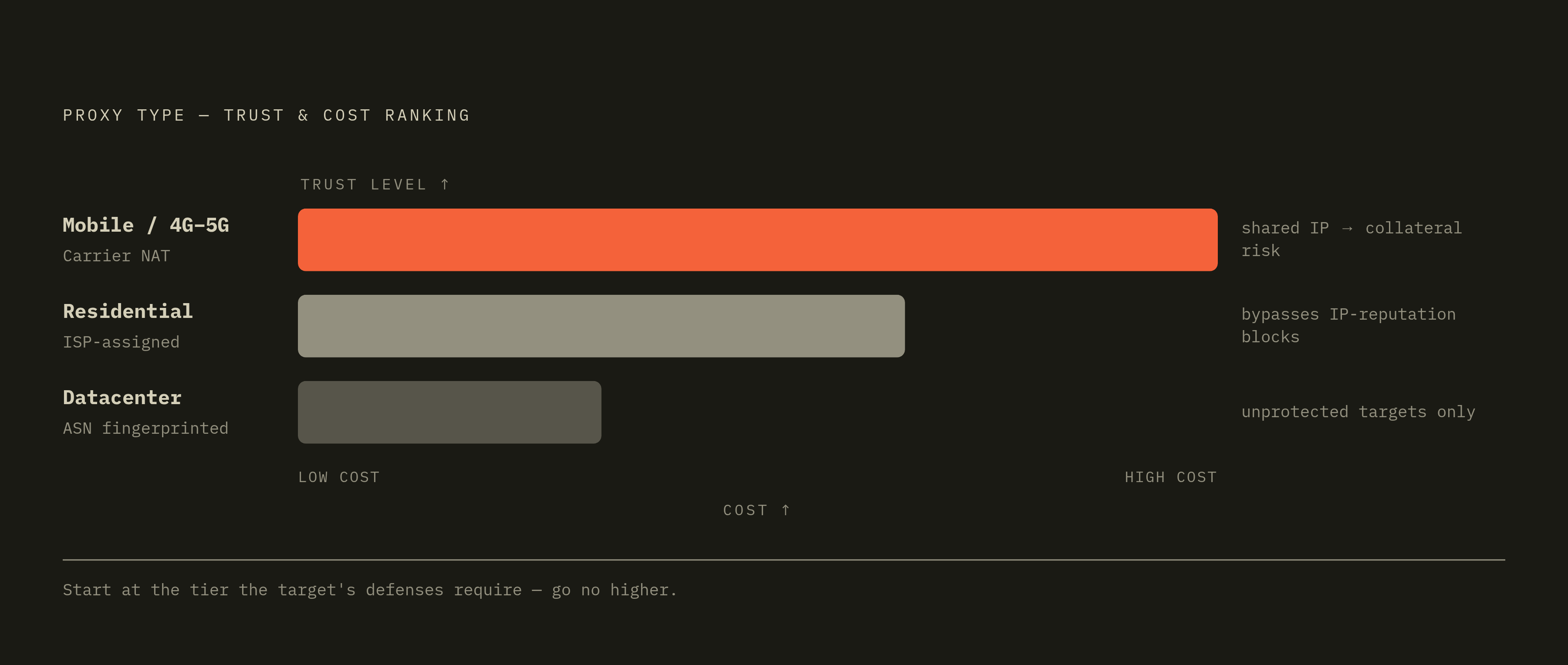
Datacenter IPs run into trouble on most production targets, which makes residential IPs the practical starting point for reliable scraping at volume. ISP and mobile IPs sit above that floor for specific cases.
Datacenter IPs come from server infrastructure, and an ASN lookup identifies them as such almost instantly. They're fast and cheap to run at scale, but easy for a well-defended site to fingerprint and block. But they still make sense against less-protected sources or internal-facing endpoints where the target isn't running sophisticated detection.
Residential IPs are real addresses assigned by ISPs to home internet connections. They carry a higher baseline of trust because they look exactly like ordinary consumer traffic, which makes them effective against IP-reputation firewalls and against geo-restricted content that checks where a visitor is connecting from.
Mobile proxies use real IPs from 4G and 5G devices. Carrier-grade NAT means a mobile carrier shares a single IP across many different customers at once, so blocking that IP risks blocking legitimate users too, and that's what gives mobile IPs the highest trust tier of the three. That protection comes at the highest cost of the group.
Picking the right tier here is a decision tree, not a taxonomy to memorize: start with what the target's defenses look like, then move up the tiers only as far as the job requires. Geo-targeting rides on top of this same decision. Localized content, meaning regional prices, local availability, country-specific regulatory pages, only comes through accurately if the request exits from an IP in the right country. That's a data-quality concern as much as an access concern: broad geo coverage keeps whatever a downstream system consumes grounded in the right market.
The choice of IP type often comes down to what data needs pulling and how fresh it needs to stay. Context can crawl a full site and pull structured data through a JSON schema, so a team can define exactly which fields matter before the rotation strategy gets locked in, and that avoids paying the cost of retrieving pages of content that never gets used downstream.
How modern anti-bot systems have made IP rotation insufficient
Getting the IP layer right used to be most of the job. It still matters, but anti-bot systems have added layers that rotating residential IPs through a backconnect gateway don't touch at all: TLS fingerprinting, behavioral modeling, and header consistency checks.
TLS fingerprinting works before a request even reaches the application server. When a client opens a connection, the CDN or WAF in front of the target inspects the TLS Client Hello message, which carries the cipher suites, extensions, and protocol version the client offers. Those get hashed into a fingerprint that identifies the client software, a particular HTTP library or browser build, no matter which IP the request comes from. JA3 was the original standard for this; JA4, built by FoxIO, is the successor designed specifically to resist the tricks that got used to dodge JA3 detection.
Behavioral modeling adds a second layer that has nothing to do with the network. Anti-bot systems track mouse movement, scroll speed, typing rhythm, click coordinates, the gaps between interactions, and the order in which a visitor touches page elements, then run that session data through machine learning models trained to separate human behavior from automated behavior. Changing the exit IP does nothing to these signals, since they're generated by what the client does after the connection is already open.
A crawler that ran cleanly against a target for months suddenly starts returning 403 errors or blank pages, with no code change on the scraper's end. The target updated its detection stack, and the fingerprint the scraper has been presenting all along now matches a pattern that gets flagged on sight. Buying a bigger residential IP pool doesn't fix this, because the IP was never the layer that failed.
As detection adds TLS fingerprinting, behavioral signals, and header checks on top of IP reputation, getting a request past the gate stops being the whole job. What happens to the content that does make it through matters just as much. Context's Markdown conversion and structured schema extraction sit downstream of all that, and they turn whatever gets past the defenses into something clean and consistent enough for an AI agent to actually use.
Hybrid proxy strategies in production pipelines
Pipelines that stay reliable under real anti-bot pressure don't rely on any single layer. They combine residential rotating proxies with configurable session lengths, browser fingerprint management, consistent header profiles, and a rendering layer for sites that need JavaScript executed before content appears.
Session duration is usually the first thing to configure. Most production systems run residential rotating proxies with sessions held for somewhere between 10 and 30 minutes, long enough to carry a multi-step workflow through to completion, then they rotate to a new IP once that session closes. That balance gives the anonymity benefit of rotation without sacrificing the continuity that stateful targets need.
Headers need to move in step with the IP, not sit as a fixed setting. If the exit IP changes but the User-Agent, accept-language, and platform headers stay the same or don't match the new IP's geography, the fingerprint contradicts itself, which is exactly the kind of inconsistency detection systems are built to catch. Production setups treat headers as part of the rotation profile itself, updated alongside the IP rather than configured once and left alone.
JavaScript rendering sits on a separate layer from IP routing. If a page needs a real browser to execute code before content loads, it needs a headless browser or a managed rendering service running on top of the proxy. Combining the two without coordinating them opens up new fingerprinting surface: a headless Chrome instance running through a residential IP but presenting default Playwright headers stands out just as clearly as a datacenter IP would.
Geo-targeting precision adds another layer on top of session strategy. If a sticky session holds one city-level residential IP through a localized price scrape, it returns more accurate data than a rotating session that jumps between countries mid-workflow.
Teams that skip the hybrid approach tend to fix one layer, usually IP rotation, while leaving TLS fingerprint, behavioral signals, and header consistency unmanaged. The site detects on whichever layer got left alone, and the team spends weeks chasing what looks like an intermittent proxy quality problem when the proxies were never the issue.
Monitoring closes the loop on all of this. A crawler that degrades silently for days before anyone notices is producing data rot in whatever system consumes its output. Without active change detection and success-rate tracking, even well-built hybrid infrastructure keeps running while quietly returning stale or missing data, with no error message anywhere to flag it.
Impact on AI Pipelines and RAG Systems
For an AI pipeline or a RAG system, a failing proxy layer doesn't throw an obvious error. It produces answers that sound confident and are wrong, because stale or missing web data looks exactly like valid data to the model consuming it.
RAG systems pull fresh external information at query time and feed it to the model to ground the answer, and a large share of that external information lives on the open web: prices, documentation, news, listings, regulatory pages, forum threads. Keeping that grounding current means re-crawling sources on a schedule, so the proxy infrastructure behind that crawl has to run continuously rather than once at ingestion. The scraping layer is a recurring operational dependency that never finishes and must keep running.
Freshness windows here run in days, not months. A RAG system grounded in a week-old government policy page gives wrong answers to anyone who asks about that policy. A job-matching engine pulling listings that are even a few weeks stale misrepresents what the market actually looks like right now. The model still produces a response either way, and the system still looks like it's working, which is what makes stale grounding data such a dangerous failure mode: nothing about the output signals that anything is wrong.
LinkedIn's agentic RAG system for customer support shows what this looks like built correctly. Support knowledge is proprietary and changes constantly, so the system grounds its responses in retrieved content rather than relying on what the model already knows from training. An ETL pipeline chunks, embeds, facets, and retires content before loading it into a versioned content lake, and a snapshot pointer scopes retrieval to the latest snapshot, superseding older content without deleting it. The whole design assumes continuous re-crawling as the default state.
The proxy layer is exactly where that continuous re-crawl holds up or breaks down. If a degraded proxy returns 403s, the ingestion pipeline stops receiving new content, the index falls further behind the real world, and the model starts producing outdated answers with the same confidence it would give a correct one. For a team building on top of AI systems, proxy selection determines how reliably the pipeline runs, so the evaluation criteria matter more than any single provider's marketing claims.
How to evaluate rotating proxy providers against the workload
Pool size is the number every provider leads with, and it predicts operational performance poorly. The metrics that actually predict whether a pipeline stays reliable are connection success rate, unique IP quotient, how granular the session controls are, how deep the geo-targeting goes, and true cost per successful extraction.
True cost per successful extraction is the right way to price any of this. Add proxy spend to compute cost to CAPTCHA-solving tools to the engineering hours spent debugging failures, then divide by the number of valid output rows that come out the other end. If a provider advertises a lower price per gigabyte but its success rate drops on a WAF-protected target, it can cost more in practice, because every failed request still burns bandwidth and engineering time without producing usable output. A cheap datacenter provider that trips a WAF and forces constant retries ends up more expensive than a pricier provider with a higher success rate, and that gap widens further once the output feeds an AI system that needs clean, structured content rather than raw HTML to work from.
You should check session control granularity directly, not just take it on faith. Confirm whether sticky session duration can be configured or whether it's fixed, what the maximum session length is, and whether per-request rotation and sticky sessions can both run on the same account. Real workloads mix both modes depending on the target, and a provider that only offers one rigid session type forces routing decisions that don't fit the job.
Geo-targeting depth deserves the same direct check. Country-level targeting is the floor, not the ceiling. City-level, region-level, and network-level targeting matter for anything localized, and the only way to know a provider's coverage is real is to confirm it covers the specific countries the pipeline actually targets, rather than trusting a headline count of how many countries a provider claims to support.